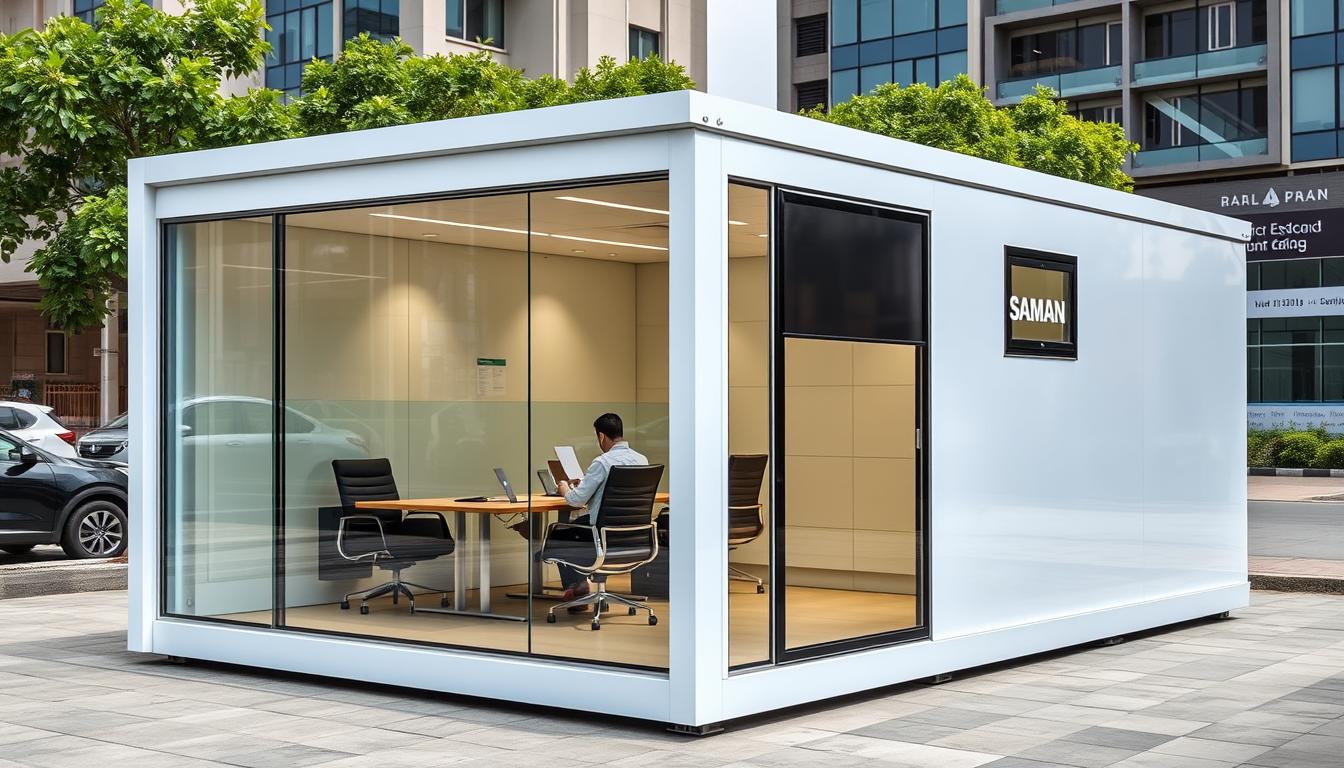
Every construction or industrial project reaches the same practical question early on: where will the site team actually work from? Portable site offices for hire and sale have become the default answer across Australian building sites, but the decision between hiring and buying isn’t always straightforward — and getting it wrong can quietly erode a project’s budget.
Whether you’re managing a six-week residential build or a multi-year commercial development, the right site office setup affects everything from team productivity to compliance with on-site safety obligations.
Why a Proper Site Office Matters More Than People Think
It’s tempting to treat a site office as a box to tick — somewhere to store paperwork and hold a meeting out of the weather. In practice, a well set-up site office does far more:
- Provides a compliant space for inductions, toolbox talks, and safety documentation
- Gives supervisors somewhere to manage subcontractors, deliveries, and variations
- Protects sensitive plans, contracts, and equipment from weather and theft
- Improves morale on longer projects, particularly through Australian summers and winters
A poorly specified office — undersized, poorly insulated, or without proper power — becomes a daily friction point that slows the whole site down.
Hire or Buy: The Real Decision Factors
The hire-versus-buy question comes down to project length, frequency of future work, and cash flow priorities, rather than a one-size-fits-all rule.
Hiring tends to suit:
- Short to medium-term projects (under 12 months)
- Businesses that don’t yet know their pipeline of future work
- Situations where storage between projects isn’t practical
- Projects with tight upfront capital and a preference to keep costs operational rather than capital
Buying tends to suit:
- Builders and contractors with a consistent, ongoing pipeline of sites
- Businesses that want a customised, branded, or specifically configured office
- Longer-term projects where the total hire cost would exceed a purchase price
- Companies with the yard space to store and redeploy units between jobs
A useful exercise is to calculate the break-even point: divide the purchase price by the monthly hire rate for an equivalent unit. If a project — or a series of projects — is likely to run longer than that break-even period, buying often becomes the more economical path.
What to Look for in a Site Office, Whether Hiring or Buying
Not all site offices are built to the same standard, and the cheapest option on paper isn’t always the best value once you factor in comfort, compliance, and durability.
Key things to check:
- Insulation and climate control — a site office without adequate insulation becomes unusable during extreme heat, which is a real issue across much of regional and northern Australia
- Electrical capacity — enough outlets and circuit capacity for computers, air conditioning, and site equipment charging simultaneously
- Layout and desk space — enough room for site meetings, plan storage, and a proper workstation, not just a cramped single-desk box
- Structural and wind rating — particularly relevant for sites in cyclone-prone regions, where a standard-spec unit may not be compliant
- Access for delivery and relocation — confirm the unit can actually get onto your site given access roads, gate widths, and crane requirements
For builders comparing configurations, it’s worth reviewing a supplier’s full range of site office options for hire and purchase to understand what’s available before locking in a spec that might be too small — or unnecessarily large — for the job.
Practical Considerations for Multi-Site Businesses
Contractors running several active sites at once face a slightly different calculation. Owning a small fleet of standard-configuration offices can simplify logistics considerably — the same unit design moves between sites, staff know exactly what to expect, and there’s no need to negotiate hire terms project by project.
The trade-off is storage and maintenance responsibility between jobs. Businesses in this position often find a hybrid approach works best: owning a core fleet for predictable, recurring work, and hiring additional units to cover peak periods or unexpected project wins.
Setup and Compliance Don’t Stop at Delivery
Once a site office arrives, there’s still work to do before it’s fully operational. Power connection, data and communications setup, and any required approvals or permits for the site all need to be arranged — and timelines here can catch out project managers who assume delivery equals “ready to use.”
It’s worth confirming with your supplier at the point of hire or purchase:
- What level of setup and connection support is included
- Whether delivery includes placement and levelling, or just drop-off
- Lead times for delivery, particularly during busy construction periods
- What happens at the end of a hire term, including removal timelines
Final Thoughts
Choosing between portable site offices for hire and sale isn’t just a cost exercise — it’s a decision that shapes how comfortably and compliantly a site operates for the life of a project. Take the time to map out project length, future pipeline, and site-specific requirements before committing, and the right option becomes far more obvious.