Australians are sleeping less, sleeping worse, and waking in more pain than at any point in recent history. According to the Sleep Health Foundation, roughly 45% of Australian adults experience some form of inadequate sleep — whether that’s difficulty falling asleep, poor sleep quality, or waking unrefreshed — and chronic back pain affects an estimated 4 million Australians, many of whom find that nighttime discomfort is one of their most persistent symptoms.
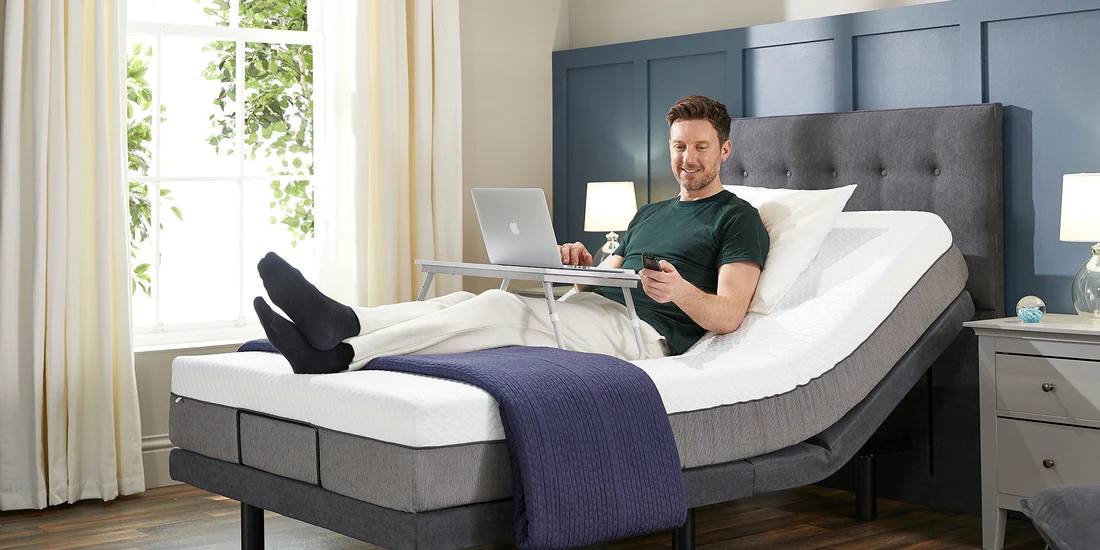
These two problems are more connected than most people realise. The position in which you sleep has direct physiological effects on your spine, your airway, your digestive system, and your cardiovascular health. A flat sleeping surface, while standard, is not inherently optimal — it’s simply what’s been available. The growing adoption of electric adjustable beds in Australian homes reflects a broader recognition that controlling your sleeping position is a genuinely useful health lever.
This article explores the relationship between sleeping position and health, the specific conditions that benefit from positional adjustment, and what the evidence says about how adjustable beds can support better sleep outcomes.
Why Sleeping Position Matters More Than You Think
When you lie flat for seven or eight hours, your body is subject to sustained gravitational and postural forces that it doesn’t experience during waking hours. For most people, these forces are benign. For many others, they exacerbate existing conditions or create new ones over time.
Consider the lumbar spine. When standing or sitting with good posture, the lumbar curve naturally supports the weight of the upper body. Lying flat disrupts this curve — the spine flattens against the mattress, and the muscles and ligaments supporting it are placed in a sustained low-level stretch. For people with lumbar disc issues, joint inflammation, or muscle tension, this prolonged flattening contributes to the stiffness and pain that many experience upon waking.
Or consider the airway. In the supine (flat on back) position, soft tissues in the throat — including the tongue, soft palate, and uvula — are subject to gravity pulling them backward. This can narrow the airway, increasing resistance to airflow and contributing to snoring and obstructive sleep apnoea. The severity of this effect varies between people based on anatomy, weight, and neck configuration, but for a significant proportion of the population, sleeping position is a primary driver of snoring severity.
These are not obscure medical concerns. They’re daily realities for millions of Australians that directly affect how rested they feel, how much pain they’re in, and how well they function through the day.
Conditions That Respond to Positional Adjustment
Chronic Lower Back Pain
Lower back pain is the most common musculoskeletal complaint in Australia. It’s also one of the conditions most consistently associated with disrupted sleep — not just because of discomfort during the night, but because the position required for sleep on a flat surface often isn’t the position that most reliably unloads the affected structures.
The “zero gravity” position — so named after NASA research on pressure distribution in weightless environments — involves elevating the head to approximately 30–45 degrees and raising the knees to roughly 30 degrees, creating a gentle flexed posture that minimises compressive forces on the lumbar vertebrae and intervertebral discs. Many physiotherapists and rehabilitation specialists recommend this position for people recovering from lumbar disc injuries or managing ongoing lower back pain.
An adjustable base makes it practical to maintain this position throughout the night. Replicating it with pillows is possible but unreliable — pillows shift as you move, and maintaining a specific angle through a full night of sleep simply isn’t achievable with a flat surface and stacked cushions.
Gastro-Oesophageal Reflux Disease (GERD) and Acid Reflux
Nighttime acid reflux — the upward movement of stomach acid into the oesophagus — is significantly more common when lying flat. Gravity, which keeps acid in the stomach during waking hours, is no longer providing its protective function. For people with weakened lower oesophageal sphincter function or high stomach acid production, the result is overnight reflux that disrupts sleep and, over time, contributes to oesophageal damage.
Clinical guidelines for the management of GERD consistently include elevation of the head of the bed as a first-line lifestyle intervention. A 15–20 degree elevation uses gravity to maintain the acid in the stomach throughout the night. Research published in gastroenterology literature has found that sleeping with the head elevated significantly reduces acid exposure time in the oesophagus compared to flat sleeping.
The challenge has always been implementation. Elevating the head of the bed using bed risers under the legs works mechanically but can make the bed feel unstable and creates an unusual sleeping angle that many people find uncomfortable. Stacking pillows under the head doesn’t work — it bends the body at the neck rather than creating a whole-body elevation that actually keeps acid below the oesophageal junction. An adjustable base raises the entire head section of the sleeping surface, creating a comfortable and effective elevation without any of these workarounds.
Snoring and Sleep Apnoea
Positional sleep apnoea — where the severity of airway obstruction is significantly worse in the flat supine position — is well-documented. For many people with obstructive sleep apnoea, the supine position increases the apnoea-hypopnoea index (a measure of breathing events per hour) by 50% or more compared to sleeping on the side or with the head elevated.
Head elevation reduces the posterior collapse of soft tissue that characterises obstructive events by using gravity to keep these tissues in a more forward position. It doesn’t replace CPAP therapy for moderate to severe sleep apnoea, but it can meaningfully reduce the frequency and severity of obstructive events, particularly for people with mild to moderate positional apnoea.
For chronic snorers without diagnosed apnoea, head elevation consistently reduces snoring severity. This benefits not just the snorer but their partner — one of the more common reasons couples invest in split adjustable configurations is to allow one partner to sleep with the head elevated without affecting the other’s flat sleeping preference.
Peripheral Oedema and Circulation
Swelling in the feet and lower legs — peripheral oedema — is a common problem for people who spend long periods standing or sitting, those with venous insufficiency, and those on certain medications. The oedema typically accumulates during the day and partially resolves overnight as venous return improves in the horizontal position.
Elevating the legs above the level of the heart accelerates this resolution. Raising the foot of the bed by 15–20 cm encourages blood and fluid to return from the lower extremities more efficiently during sleep. For people managing venous insufficiency or recovering from procedures that affect lower limb circulation, leg elevation during sleep is frequently recommended as part of ongoing management.
An adjustable base makes this continuous and comfortable — no need for wedge pillows that shift during the night or discomfort from elevated bolsters under the ankles.
Respiratory Conditions
People with chronic respiratory conditions including asthma, COPD, and chronic bronchitis often find that nighttime breathing is more comfortable with some degree of head elevation. Lying flat can increase mucus pooling in the lower airways and reduce functional residual capacity — the amount of air remaining in the lungs after a relaxed breath — making breathing feel more laboured.
Individual responses vary, and the degree of elevation that helps also varies. But for people who routinely find themselves stacking pillows to elevate their head for overnight comfort, a stable and adjustable alternative is worth considering.
Pregnancy
The third trimester of pregnancy brings a specific set of challenges for sleep. The recommendation to sleep on the left side to optimise blood flow to the foetus is well-established, but maintaining this position throughout the night is difficult. Many women also experience heartburn, which worsens when lying flat, and find that leg elevation reduces discomfort from swelling and restless legs.
An adjustable base offers positional support that a flat mattress can’t. Head elevation addresses reflux and makes breathing easier as the diaphragm is compressed by the growing uterus. Leg elevation reduces swelling. The ability to adjust freely without asking a partner to move is a practical benefit that many pregnant women report valuing considerably.
The Sleep Position and Immune Function Connection
An often-overlooked dimension of sleep quality is the relationship between sleep and immune function. Research consistently shows that sleep deprivation — even partial, chronic sleep deprivation — impairs immune response, reduces vaccine efficacy, and increases susceptibility to infection. The mechanism involves a range of processes: reduced production of cytokines (signalling proteins that direct immune activity), disrupted lymphatic drainage during sleep, and impaired T-cell function.
The sleep architecture effects of positional discomfort are relevant here. Pain, snoring, and acid reflux don’t just feel unpleasant — they fragment sleep architecture by reducing the proportion of time spent in deep, restorative sleep stages. Chronic disruption of deep sleep has measurable effects on immune function, cardiovascular health, and cognitive performance.
This is the systemic argument for addressing positional sleep problems: it’s not just about comfort on a given night, but about the cumulative physiological cost of chronically fragmented sleep over months and years.
Practical Positions for Common Conditions
For those exploring positional adjustment for the first time, a few starting points based on common conditions:
Lower back pain: Begin with a 30–45 degree head elevation and a 20–30 degree knee elevation. This approximates the zero gravity position and reduces lumbar compressive load. Adjust from this starting point based on your own comfort.
Acid reflux or GERD: Head elevation of 15–20 degrees (roughly 10–15 cm at the head) is the clinically studied range. Going higher than this doesn’t necessarily improve outcomes and may make sleeping on the side more difficult.
Snoring: Start with 15–20 degrees of head elevation. If snoring persists, a side-sleeping position in combination with head elevation is often more effective than head elevation alone.
Leg swelling: Raise the foot section by 10–15 degrees. Monitor for comfort — excessive elevation can cause the legs to slide toward the centre of the bed.
Breathing difficulties: 30–45 degrees of head elevation is commonly used. At this angle, the bed effectively becomes a reclined sleeping position, which suits some people very well and feels less comfortable to others.
These are starting points, not prescriptions. Individual anatomy, the specific nature of the condition, and personal comfort all influence the optimal position for any given person. The practical value of an adjustable base is precisely that you can explore and refine these positions without commitment.
When to Involve a Health Professional
Positional adjustment can support the management of many conditions but is not a replacement for appropriate medical care. If you’re dealing with:
- Diagnosed obstructive sleep apnoea
- Significant GERD with confirmed oesophageal involvement
- Chronic lower back pain associated with diagnosed disc or joint pathology
- Heart failure-related oedema
- Any other condition being actively managed by a GP or specialist
…then positional adjustments should be discussed with your treating health professional rather than self-prescribed. In most cases, the professionals involved in these conditions are supportive of positional strategies — but the interaction with other treatments (CPAP therapy, medications, physiotherapy programs) is worth confirming.
Conclusion
The relationship between how you sleep and how you feel is direct and consequential. Sleeping position affects the spine, the airway, the digestive system, and the cardiovascular system in ways that compound over time. For a significant proportion of Australians, the health benefits available from positional adjustment during sleep are meaningful and largely untapped — simply because the standard flat bed doesn’t offer the ability to adjust.
Adjustable bases change that equation. They’re not a medical device, and they’re not a cure for serious health conditions. But they give you genuine control over your sleeping position — head elevation, leg elevation, and everything in between — in a way that a flat surface simply doesn’t allow. For anyone dealing with back pain, reflux, snoring, circulation issues, or breathing difficulties during sleep, that control is worth taking seriously.